
Newman's Influence on American Catholic School Curriculum


John Henry Newman, recently recognized as both a saint and as co-patron of Catholic schools, lived at a time when Europeans and Americans were actively rethinking the purpose of education. Newman’s ideas about teaching and learning—most famously expressed in his 1873 The Idea of a University—came at a fulcrum point in history, as colleges and universities were evolving from their medieval roots into modern research universities shaped by the needs of the industrial age. Newman’s writing provides a valuable snapshot of the debates that shaped this transition.
This article provides a brief overview of the development of Catholic schools in the United States and shows how Newman’s ideas, coming as they did at an important moment of transition, fit into that broad context. It begins by describing Catholic school curriculum in the United States before Newman’s lifetime. It then contextualizes Newman’s work by exploring the major issues in US Catholic education during the late 1800s, when his writings were first published. Finally, it explores Newman’s legacy by showing how his ideas shaped American Catholic school curriculum beyond his lifetime in the twentieth century.
Catholic Education Before Newman
More than two centuries before US independence, Catholic “schools” of a sort existed on the North American continent in the form of Spanish and French missions to Native Americans. While much of this missionary activity took place north or south of the present United States borders, by the early 1600s, Franciscans from New Spain established an outpost in what is today New Mexico, and Jesuits from Quebec reached what is now upstate New York. Such missions were centers of learning and knowledge exchange; priests taught European-style farming techniques, metalworking, woodworking, and other trades, while also learning Native American languages, linguistics, agricultural practices, and cultural values. The missionaries’ main objective was to introduce their religion through catechism, sacred music, and sacramental ministry, which rounded out the “curriculum.”
Formal schools emerged later in the colonial period as Europeans and their children began to arrive in greater numbers. Jesuits were teaching in colonial Maryland by the 1640s, even though Catholic schools were officially illegal in the English colonies. Not surprisingly, the first permanent Catholic school in the future United States took root in Louisiana—a French colony where Catholic missionaries were encouraged, not discriminated against. In 1727, French nuns established Ursuline Academy in New Orleans, which still exists today. Only after the American Revolution, when freedom of religion was enshrined in the Constitution, did Catholics freely and legally open schools on the east coast: Georgetown University (1789), St. Mary’s Seminary in Baltimore (1791), and Mount St. Mary’s University in Emmitsburg, Maryland (1808).
The curriculum at these early Catholic schools (and others that opened in the following decades) was based mainly on two European documents. The first was the Ratio Studiorum, published by the Jesuits in 1599 as the standard curriculum for all Jesuit schools. (Given the influence of the Jesuits on Catholic education, many other orders used it as well.) The second was the Conduct of the Christian Schools, written by the Lasallian Christian Brothers in 1706 and widely used as a curriculum plan at the Brothers’ schools in Europe. Both were originally written by and for culturally Catholic societies and represented a cutting-edge curriculum in their days.
The Lasallian Conduct of the Christian Schools focused on lower-level education, emphasizing reading and writing for young children. The Jesuit Ratio Studiorum emphasized higher education—what we think of today as secondary (high school) or college-level work. It laid out a seven-year plan of study toward a bachelor’s degree (not the familiar four-year plan in use today), and emphasized philosophy, science, and classical languages. Students spent a significant part of their day conjugating Latin and Greek verbs, memorizing the work of ancient Roman poets, and studying the philosophy of Aristotle and Thomas Aquinas. In a typical Jesuit college, a single professor taught all these core subjects to a group of students; faculty did not specialize in a specific subject area, but rather in a cohort of students whom they followed from matriculation to graduation. Catholic priests who served as “professors” in the era were expected to be Renaissance men with a command of everything from chemistry to elocution—a model that John Henry Newman, in his day, would regard as a kind of ideal.1
This at least was the curriculum at Catholic schools for male students. For girls, the structure was somewhat different. The highest level of education available to female students was the equivalent of a modern-day high school, and formal schools were associated with—often inside of—convents. The first teaching orders of Catholic sisters in the United States included the Sisters of the Visitation in Georgetown, District of Columbia and St. Elizabeth Ann Seton’s Sisters of Charity in Emmitsburg, Maryland. In all cases, the curriculum at convent schools emphasized music, art, dancing, drawing, literature, sewing, etiquette, French language, and other skills that were considered desirable for educated women at the time. Nuns taught reading and writing to young children (including boys), but after they reached roughly the age of thirteen, the relatively few children who continued their education were separated by sex, with boys going off to colleges and girls enrolling in what amounted to “finishing schools” in the convents.
Neither the Ratio Studiorum nor the Conduct of the Christian Schools made much provision for religion classes. Both handbooks were written in culturally Catholic countries (Italy and France, respectively), where it was taken for granted that students were exposed to the Catholic faith in daily life. This is not to say that the curriculum was devoid of religion; both documents emphasized the importance of students’ moral formation, and teachers were expected to set a good example by their conduct and religious observance. Religion was present on campus through daily Masses, sodalities, prayer before meals, and the sacraments. Religion was, however, primarily a matter of ritual, lifestyle, and worship, not an academic course of study.
In the early 1800s, theology, medicine, and law were still considered the three “noble professions” that required specialized training. A student who did not aspire to become a doctor would not study medicine; similarly, a student who did not aspire to become a priest would not study theology. Students entered the legal or medical professions through apprenticeships or by enrolling at specialized schools, which were sometimes independent and, when they were affiliated with a university, were usually kept separate from the liberal arts branch of the institution. Likewise, theology courses were largely confined to seminaries. It was not until later in the nineteenth century that Catholic colleges began to introduce religion classes for lay students, and even then, they were simple catechism lessons designed to communicate the tenets of the faith, not to encourage critical thinking or reflection as was the case in seminaries. At some colleges, catechism class took place once per week and was tacked on to the end of the school day; Catholic students stayed an extra hour for religious instruction while their non-Catholic peers went home early.2
This was also a time when education—religious or otherwise—was a rare privilege. The United States public school system as we know it had not yet taken shape, and outside of cities like Boston and Philadelphia, free public education was generally not available to most families. Most teaching and learning took place in the home, and wealthy families hired private tutors or governesses to live with their children. Many of the charity schools run by priests, brothers, and nuns sought to offer a free education to those who were too poor to hire such tutors—an audience that grew dramatically as Catholic immigrants flocked to the United States in the mid-1800s and beyond.
Catholic Education in the Late 1800s: Newman in Context
In The Idea of a University, John Henry Newman argues in favor of the kind of broad, multidisciplinary education that characterized Catholic (and most non-Catholic) schools in the early nineteenth century. This was the sort of education Newman himself would have received as a boy. But by the late 1800s, it was increasingly becoming rarer as research universities—in both Europe and the United States—began to reward specialization and scientific discovery.
Industrialization and the interests of the business community were pushing education in a more practical direction. The United States passed the Morrill Land Grant Act in 1862, incentivizing states to build public universities that focused on applied sciences like engineering. German universities were emphasizing research and discovery over teaching, and that model was making its way to the English-speaking world—both at Newman’s Oxford and at major American institutions. Beginning in the 1860s, newly founded universities like Cornell, Johns Hopkins, and the Catholic University of America focused on graduate education and research at the expense of undergraduate formation—a strategy that existing schools like Harvard soon imitated. Harvard’s president at the time, Charles W. Eliot, introduced an open-ended elective system that allowed students to choose their own courses with few restrictions—something that would have been unthinkable decades earlier.
Newman’s argument against this trend can be seen as reactionary. An ideal education, according to Newman, is one that broadens the mind through all branches of human knowledge—not one that narrowly prepares a student for a technocratic career. Newman argued that this exposure to diverse schools of thought was essential for well-rounded intellectual and moral formation. He writes:
[A]ll branches of knowledge are, at least implicitly, the subject-matter of (a university’s) teaching … these branches are not isolated and independent of each other, but form together a whole or system … they run into each other, and complete each other.3
In another respect, however, Newman’s arguments can be seen as revolutionary. He takes his commitment to interdisciplinary learning to its logical conclusion, insisting that a broad, inclusive curriculum must include theology courses. As summarized by Edward Hahnenberg, Newman’s stance was that:
[A] university, by its very nature, professes to teach all knowledge. Were it not to teach the knowledge of God—theology—it would not be teaching all knowledge, and thus it would not be a university in the full and true sense.4
This argument flew in the face of centuries of tradition surrounding the three “noble” professions. In its day, the idea that all students should study theology was as controversial as the suggestion that all students should study medicine or law. But if the ideal intellect is one shaped by diverse disciplines and schools of thought, theology cannot reasonably be excluded.
To Newman’s contemporaries, his arguments would have seemed like a strange mishmash of conservative and radical ideas. On one hand, Newman was advocating for a return to a more classical form of education that eschewed modern trends like hyper-specialization and laissez-faire course scheduling. On the other hand, he was also arguing that theology—a hitherto privileged field—must be incorporated into any liberal arts education worthy of the name. Newman’s ideas were logically consistent but nonetheless would have shocked both traditionalist and progressive readers for different reasons.
At roughly the same time that Newman’s ideas about teaching theology to the masses were upending the university scene in the United Kingdom, Americans were embroiled in their own debates about the role of church and state in the classroom. While most American public schools reflected a culturally Protestant worldview (and even taught denominationally neutral Bible classes), they were increasingly secularizing as immigration made the country more religiously diverse. Broadly speaking, US Catholic bishops viewed public schools with distrust and built parochial schools out of fear that public education did not reflect Catholic values.
However, some American prelates (most notably Archbishop John Ireland of St. Paul, Minnesota), believed wholeheartedly in the American experiment with secular public education and sought to establish the church as a partner, not an adversary, in the government’s work. In Ireland’s archdiocese and elsewhere, some Catholic schools accepted tax money and agreed to limit religious instruction to afterschool hours. Meanwhile, an influential professor, Rev. Thomas Bouquillon of the Catholic University of America, published a controversial book titled Education: To Whom Does It Belong (1891), in which he argued that the state’s role in education was legitimate and that Catholics could cooperate with the government in building secular schools. The ensuing “Bouquillon Controversy” rocked the American church just as Newman’s ideas were rocking a British society, which was, at the time, also becoming more culturally and religiously diverse.
Newman’s Legacy
By the mid-twentieth century, Catholic schools in the United States, seeing no other realistic option, started to follow the lead of secular schools to remain competitive and meet accreditation standards. At the university level, the Jesuits and other religious orders sent their members off to graduate school to earn PhDs—often at secular universities—which required them to specialize in specific fields for the first time. Catholic colleges introduced more electives and allowed students to pursue majors rather than follow a common, classical curriculum.
In this environment, Newman’s work saw a resurgence in popularity among Catholic educators as they struggled to define what made Catholic schools distinct. As their curricula began to resemble that of any other university, Catholic institutions drew inspiration from Newman by incorporating theology into their undergraduate plans of study. Many Catholic universities established theology departments for the first time. Since there was no need to duplicate the programs offered at seminaries, these new theology departments focused on religious literacy among laypeople and—outside of a few leading institutions like Notre Dame and Duquesne—did not offer PhDs or other graduate programs.
Catholic universities also turned to another figure—St. Thomas Aquinas—as they reconceptualized their curriculum. As they taught physics, chemistry, economics, and other modern subjects, Catholic universities tried to present each discipline through the lens of Aquinas’s moral theology, using his scholastic way of thinking to center all disciplines around the church’s teaching authority. This neoscholastic revival peaked in the 1920s and 1930s, and elements of it survived as late as the 1960s.5 It nicely fit Newman’s concept of the university as an agent of moral formation. Thus, while universities took inspiration from Newman at this time, they largely operationalized their work through Aquinas.
Neoscholasticism was the backbone of Catholic higher education through the early 1940s, but World War II, the rapid enrollment growth that followed the 1945 G.I. Bill, and the explosion in scientific research that accompanied the Cold War and the Space Race left many of these old traditions obsolete. One of the leading pragmatic voices at this time, Rev. Theodore Hesburgh, CSC, of the University of Notre Dame, often expressed admiration for Newman but spent his career arguing that modernity had rendered much of Newman’s work impractical. In a 1962 article in the Jesuits’ America magazine, Hesburgh pointed out that the greatest scientific advances in human history had mostly taken place after Newman’s death, and Newman’s theory, while beautiful, was extraordinarily difficult to implement in practice.6
Hesburgh and his contemporaries did, however, continue to take inspiration from Newman as they reconceptualized the Catholic university for the mid-twentieth century and beyond. In 1967, leading Catholic universities adopted what became known informally as the “Land O’Lakes Statement,” in which they mapped out Catholic higher education for the future. The statement shows Newman’s long shadow, notably in its insistence that all Catholic universities establish departments of theology that will serve as the center of academic life, engage in dialogue with other disciplines, and provide a religious and moral perspective to the student experience. While this recommendation seems so obvious today that many readers will greet it with a shrug, it was a novel idea at the time, especially among a generation that had grown up thinking of theology as an esoteric field confined to seminaries. This view received ecclesial endorsement in the Second Vatican Council, where, partly due to the influence of Jesuit Father John Courtney Murray, SJ, the church encouraged religious literacy among laypeople and officially opened the door for the laity to play a bigger role in academic theology.7
Today, as the curriculum at Catholic institutions continues to evolve, Newman’s revolutionary work continues to serve as a guiding star. It can be difficult for modern generations to understand how radical some of Newman’s ideas were in their day, so integrated have they become in what we now consider a normal Catholic college experience. Most students at Catholic colleges and universities today take for granted that theology has always been a part of their schools’ curriculum, when in fact, such requirements were introduced in the 1920s or later as the schools evolved from their classical roots, replacing a curriculum focused on Latin and Greek with one that attempted to balance the Catholic tradition of interdisciplinarity with the need to specialize. Newman lived at a transition point in this history, and his ideas did more than perhaps anyone’s to shape the direction of Catholic education since.
1 Michael T. Rizzi, Jesuit Colleges and Universities in the United States: A History (Catholic University of America Press, 2022).
2 William McFadden, ed., Georgetown at 200: Faculty Reflections on the University’s Future (Georgetown University Press, 1990), 79–105.
3 Newman, Idea (University of Notre Dame Press, 1982.), 162–63.
4 Edward Hahnenberg, “Theodore M. Hesburgh, Theologian: Revisiting Land O’Lakes Fifty Years Later,” Theological Studies 78, no 4 (2017): 942.
5 Mary J. Brown, Heresy in the Heartland: The Controversy at the University of Dayton, 1960–1967 (Catholic University of America Press, 2022).
6 Theodore Hesburgh, “Looking Back at Newman,” America (3 March 1962): 720–21.
7 Michael T. Rizzi, “Newman’s Idea of a University in Dialogue with the Land O’Lakes Statement of 1967,” Newman Studies Journal 16, no 2 (2019): 34–50.

Michael Rizzi
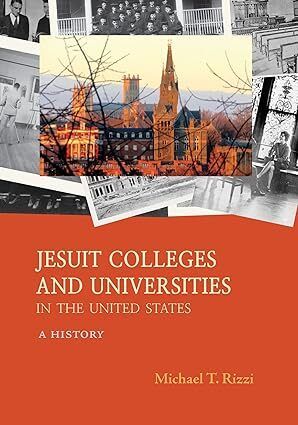
Michael T. Rizzi is author of Jesuit Colleges and Universities in the United States: A History (Catholic University of America Press, 2022). He is Director of Student Affairs at the University of Pittsburgh.
Topics
Newsletter

National Institute for Newman Studies
QUICK LINKS