
The German Founder of the Oratory and the Virtue of Humility in Newman

The Oratory of St. Philip Neri is commonly held to have had three founding figures in its history. At its head, of course, is St. Philip Neri (1515–1595) himself. A few decades after him, Cardinal Pierre de Bérulle (1575–1629) brought the Oratorian concept to France, although in such a different form that even Oratorians themselves have argued that the two concepts between St. Philip and Cardinal de Bérulle are “two Oratories” distinct from one another. Finally, there is St. John Henry Newman (1801–1890), who on a visit to Italy fell in love with this Congregation of priests, brought together in community not on the basis of vows or monastic discipline but through a simple bond of love. St. Philip quickly became Newman’s model of priestly life, “my special Father and Patron.” As Newman admitted in The Idea of a University, “whether or not I can do any thing at all in St. Philip's way, at least I can do nothing in any other.”1 He eventually brought the Oratory to the English-speaking world with the founding of the Birmingham Oratory in 1848.
A Forgotten Founder in St. Philip’s Tradition
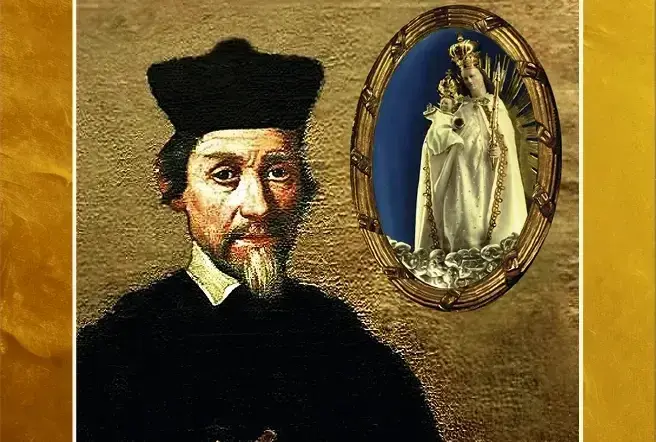
Largely forgotten in past centuries, however, is a fourth major figure who also had an impact on Oratorian history and brought the Congregation to the German-speaking world: Fr. Johann Georg Seidenbusch. Having died in 1729 with a reputation of sanctity, he founded the first three Oratories north of the Alps in Munich, Vienna, and Aufhausen (and unsuccessfully attempted a fourth founding in Prague). In recent years, Fr. Seidenbusch has been reintroduced as a model of priestly life in the German-speaking countries. In 2014, Pope Benedict XVI described him as a “significant figure” who needs to be “brought back into the public conscience.” Indeed, as the Bavarian Pope said about this Bavarian priest, “it seems to me an important task to highlight him as a model for priestly community life. I sincerely hope [...] that priests not only in Bavaria but worldwide will gain a new patron.”2
Indeed, Fr. Seidenbusch—who was not only the founder of the Oratories of St. Philip Neri in the German-speaking world but also the builder of a major pilgrimage shrine, famous painter, and the composer of the hymns Come all ye creatures of the Lord and Hail Holy Queen (yes, the one that found its way into Sister Act!)—can be a beautiful guide for priests and all faithful in humility, simplicity, love of God, and service to others, as well as a great case study of what Newman appreciated in the life and spirituality of St. Philip.
A Restorer of the Images of God
Let us begin with a brief biographical account of this priest. Johann Georg was born in 1641 in Munich. While his family was devout, his childhood coincided with the Thirty Years’ War, which ravaged Bavaria, killed almost 30% of its population and led to massive economic woes. But when the war ended in 1648, a revival of Catholic faith occurred. Young Johann Georg was in the midst of it. Along with the other boys in his neighborhood, he organized processions of peace and built little hermitages in the gardens of their family homes, where they could play hermits.
In 1651, Johann Georg entered the Jesuit school in Munich, followed by two years at a Benedictine monastery in Scheyern. Throughout this time, his love and devotion for the Virgin Mary increased. While with the Jesuits, he received a Marian statue that would remain with him for the rest of his life, which became the focal point of the later pilgrimage shrine. As he grew up, it turned out that he also had a great talent for painting. Joachim of Sandrart, a famous baroque artist of the time and ardent Calvinist, invited Johann Georg into training with him to develop his full potential as a painter. But the latter had other plans—sort of: “Yes, I want to become a painter, but a painter who, with the brush of his tongue and the colors of the divine word, restores the images of God ruined by sin.”3
Thus, Johann Georg set out on the path to the priesthood. In 1666, he was ordained in the Cathedral in Freising. Immediately after his ordination, his humility is splendidly on display: Rather than accepting a very wealthy parish that was offered to him, he asked for a poor parish in the countryside. After much back-and-forth, he received the small and humble parish of Aufhausen, where he would serve to his death, for a total of 63 years.
An Oratorian Devoted to Mary
While Aufhausen was an obscure, rural parish of Bavaria, it would become a surprising center of faith and a site of pilgrimage almost as soon as Fr. Seidenbusch arrived. It did not need much: He built a small hermitage again for himself, simply set up his Marian statue that he had received from the Jesuits under a cross he received from the Benedictines and started praying different popular devotions every evening. Quickly, the kids of the village came, then their parents, then many more. Fr. Johann Georg dedicated the devotion to “Mary of the Snow” and over the years and decades, it became a major shrine.
To enable the increasing pilgrim numbers to Aufhausen, Seidenbusch searched for a way to have several priests serve in the town as one community. On travels to Rome in 1675, he visited the Oratory of St. Philip Neri—similar to what Newman would do two centuries later—and he immediately fell in love. The provost in Rome was enthusiastic about Seidenbusch’s plans to bring the Congregation to Aufhausen: “Go to Germany and start! God will be with you.”4
Due to his talent in painting, he was in contact with the ruling houses in both Bavaria and Austria, who loved his work and asked him to teach them how to paint. Through the outsized influence this simple country priest gained, he was able to open another Oratory in Vienna in 1701 and then in his home of Munich in 1707.
Yet, it was never his meetings with the powerful that he desired most. As he became older, he increasingly lived a contemplative life in his parish of Aufhausen, bringing both the sacraments and devotion to the Virgin Mary to the local people. At the age of 88, he died on 10 December 1729, and was buried, as requested by him, in the floor of the church entrance—so that all visitors would trample over him—with the writing: Hic requiescit minimus sacerdos (“Here rests the least of all priests”).
The Love to Be Unknown
In this desire for his resting place, we can detect a virtue that Newman later considered most central and worthy of imitation in the life of St. Philip Neri: humility, the sense of being so little, so as to desire to be unknown to the world. As Newman speaks of in his homily The Mission of St. Philip Neri, it is “the love to be unknown” that defined Philip and that should define the Oratorians in England, too. “O touching and most genuine traits of our sweetest and dearest Father, and most impressive lesson to us,” Newman proclaims full of wonder. St. Philip “did not ask to be opposed, to be maligned, to be persecuted, but simply to be overlooked.”5
This littleness also led to a fundamentally different attitude toward others: Rather than turning to revolutionary tools, such as Girolamo Savonarola had done in Philip’s birthplace of Florence a few decades earlier, St. Philip’s way was “the slowest” yet “the surest,” it was “the most quiet,” yet “the most effectual; and he rather would not have attempted that work at all, than have sacrificed his humility and modesty to the doing of it.”6 Thus, where Savonarola started bonfires and rallied the masses, St. Philip was “the whisper of a gentle air.” This air was never angry or vengeful, but he always encountered others “good-naturedly and playfully.”
Strange enough, despite this desire to be overlooked, St. Philip ended up being visited by popes, cardinals, statesmen, and artists. He shrank “from every kind of dignity, or post, or office,” and simply wanted to live “the greater part of day and night in prayer,”7 yet became one of the most highly sought-after priests of his time and is known to this day as the “Apostle of Rome.”
We can see very similar traits, as identified by Newman, in the life of Johann Georg Seidenbusch. We have noted his humility and desire for a life in obscurity by foregoing a successful painting career and wealthy and prestigious parishes (that could have led to higher ecclesial positions) to serve a small and poor parish. Just as with St. Philip, this would often paradoxically not deter meetings with men and women of great worldly esteem, with bishops and abbots who visited his pilgrimage shrine, with the Habsburg family, and many others.
Everything with God and without Him nothing
However, just as with the “Apostle of Rome,” this did not lead to arrogance, since he was fully grounded in prayer and in the desire for humility. Just like St. Philip, who had left Florence and lived in Rome as a poor hermit for a decade before becoming a priest, Johann Georg felt most at home in a hermitage, as a contemplative, fully enveloped in God’s love, a love much more majestic and worthy of reverence than any worldly acclaim or honor. Omnia cum Deo et nihil sine eo— “Everything with God and without Him nothing!” This was Seidenbusch’s motto throughout life. Everything that is not God and His blessed Mother was not worth the tumult. When things went wrong, it was a cause for humor and renewed dedication to God—just like the time someone had broken into his room in the Oratory in Vienna and stolen all his belongings and he simply wanted to sing the Te Deum together with his panicked priest-brothers. It was only in the journey to God that ambition was justified: “Mean well, do what you can—in all else, let God take care!”8
Fr. Seidenbusch radiates to our day the humility, serenity, humor, and simplicity that was also so characteristic of St. Philip and that St. John Henry Newman pointed out as the most glorious attributes of the founder of the Oratorian Congregation. The long-forgotten Johan Georg Seidenbusch can, thus, become for us, too, an example of following Christ wholeheartedly but always as “the least” of all.
1 Newman, Idea (Longmans, Green, 1905), 238.
2 Letter from Benedict XVI to the Provost of Aufhausen (11 September 2014).
3 Institut des Blutes Christi, “Geistliche Familie von Heiligen Blut.”
4 “Origin and Development of the Aufhausen Oratory,” Oratory of St. Philip Neri in Aufhausen.
5 Newman, OS (Longmans, Green, and Co., 1904), 230–31.
6 Newman, OS, 232.
7 Newman, OS, 240.
8 Institut des Blutes Christi, “Geistliche Familie von Heiligen Blut.”
Share

Kai Weiss
Graduate Student in Theology
Kai Weiss holds graduate degrees in theology from the Pontifical Faculty of the Immaculate Conception in Washington, DC, and in Politics from Hillsdale College. He is a board member of the Hayek Institute. He was a visiting scholar at NINS in the Spring of 2023.
Topics
Newsletter

National Institute for Newman Studies
QUICK LINKS