
Concerning Cardinal Newman's Childhood


A small collection of letters from the archives of the University of Chicago has recently been added to the NINS Digital Collections.
The collection comprises thirteen original manuscript letters written to Sir Percy William Bunting,1 editor of the Contemporary Review.2 Five are from John Henry Newman, seven are from his younger brother Frank Newman, with one final letter from the Catholic theologian Monsignor Moyes.
One letter from this new collection stands out as being of particular importance and interest to Newman scholars. The letter is one in which Frank Newman, writing in November 1885, describes John Henry's personality as a child. It is a letter seemingly hitherto unknown within the scholarship, but which provides a rare glimpse into the boyhood of the future saint.
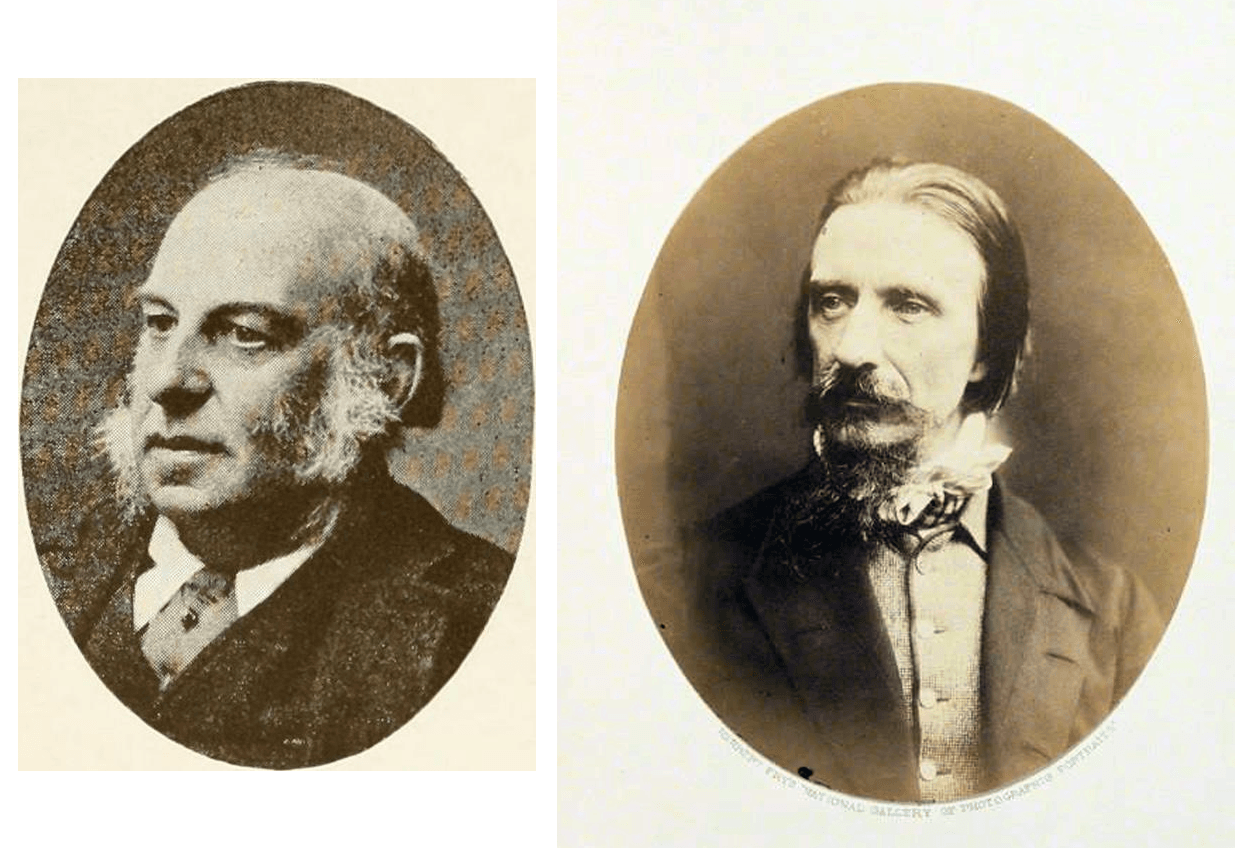
The full text is as follows.
Norwood Villa
15 Arundel Crescent
Weston super Mare
Nov 18/85
My dear Sir,
It is strange that any one should have reported that I have any thought of publishing in my brother's lifetime, any reminiscences of him. I am sure that he would dislike it extremely, as he strongly disliked Mr Mozley's before seeing them,3 and it is a thing that I would on no account undertake even if I thought I had things intrinsically worthy of being made public. The chief matter that perhaps I may tell you, is, that in boyhood he was so prematurely studious, that in the six years that I was at the same school with him,4 I cannot remember seeing him play at any games, —neither fives, nor cricket, nor football, nor trapball, nor patball, nor marbles, nor pegtop, nor rounders, nor prisoners' base, nor hopping, nor other running and leaping or swimming, nor hopscotch, nor longrope, or other skipping, in all of which we boys abounded, in all of which, except cricket and pegtop, I took zealous part. To this excess of study I impute the shortsightedness which he alone of our family had. His whole mind was premature.
I am sorry that I cannot gratify you, since you would have desired me to make The Contemporary my vehicle to the public.
If I outlive my brother, being 4 years and 4 months his junior,5 I should, in his defence or in my mother's defence, wish to rebut any thing which might then be published injurious to either. My friend Miss Anna Swanwick6 is persuaded that what she calls “injurious mythi” are already afloat which would come out in print at his death —under her pressure I committed to writing (and transmitted to her, as my junior by ten years) an accurate account of certain affairs which have been misrepresented; but, for reasons of her own which I ill understand, she sent the document back to me, which, if I die before my brother, will come into my executor's hand. It strikes me as possible that some talk from my friend Miss Swanwick may have given rise to the report which has deceived you.
I am almost ashamed to say that though I correctly read your name in a former kind communication, I decipher it very doubtfully now.
Thanks for Professor George Stoke's address, but I want no further public notice. The matter is not worth correcting.
Very truly yours
FW Newman
1 Sir Percy William Bunting (1836–1911) was a Methodist lawyer and journalist from Manchester, UK.
2 The Contemporary Review was a monthly journal, aimed at middle class intellectual debate, launched in 1866, Bunting was editor from 1882 to 1911. It ceased printing in 2013
3 Rev. Thomas Mozley (1806-1893), Newman's brother-in-law, who in 1836 married his younger sister Harriet Newman. In 1882 he published Reminiscences chiefly of Oriel College and the Oxford Movement
4 The Newman boys attended Great Ealing School in London.
5 Frank Newman would outlive the Cardinal by seven years.
6 Anna Swanwick (1813–1899). A Unitarian and Classical scholar and translator who studied under Frank Newman. She was a prolific campaigner for the equality of education for women.

Lawrence Gregory
Lawrence Gregory is the NINS senior archivist and UK agent, and a historian of nineteenth-century English Catholicism, who also enjoys cats and steam trains.
Topics
Newsletter

National Institute for Newman Studies
QUICK LINKS